1. Prelude
Germany's reputation in engineering is longstanding, but it is one invention from Mainz in the 1450s which altered things more than most. Johannes Gutenberg, a goldsmith by training, adapted the screw press to transfer ink from movable type onto paper or cloth, making it possible to produce books at a speed and volume no copyist could approach back then. The consequence was beyond just faster books. Ideas that had previously circulated in manuscript among a small number of scholars could now reach thousands of readers, across different cities, that too within weeks. The Protestant Reformation is the example historians return to most, Luther's theses spread as rapidly as they did largely because print existed to carry them. Postman and McLuhan$\mathbf{^0}$ were both interested in what this kind of shift does at a deeper level, the cultural effects of a shift from using the written word as our primary way to transfer information$\mathbf{^1}$. Their concern was the transition from the written word to mass media, and eventually to television, as a change not merely in delivery but in cognition itself.
In 1985, American sociologist Neil Postman published his academic corpus on media ecology$\mathbf{^2}$ in the form of a book titled "Amusing Ourselves to Death: Public Discourse in the Age of Show Business". In an attempt to distinguish the Orwellian and the Huxley$\mathbf{^3}$ visions of the future, Postman particularly criticises and sees television's entertainment value as a then present-day fictitious pleasure drug, by means of which the citizens' rights are exchanged for consumers' entertainment. Here, Postman along with the works of Marshall McLuhan, also tell us that how we communicate ideas, the media that we use, actually changes the way that we think. McLuhan's favourite phrase in his works was, "the medium is the message". Postman uses early American culture as an example of what he calls the Typographic Mind, a mind that has been shaped primarily through consuming books. It follows that it's a mind that is used to prolong sessions of engaged, serious, rational activity. In other words, it's a mind that is used to focusing.
Reading as an activity actually helps build your focus and it shifts the way that you think.
A stark takeaway at this point in this context is - reading as an activity actually helps build our focus and it shifts the way that we thinks. Alas, in the current times, we as a society have stopped reading. Postman observed in his time, more people were watching television than reading and from then to present, those numbers have only gotten worse. Over and above to this screens, the internet, phones and all other devices just exacerbates the problem. Before proceeding further, we consider juxtaposing two anecdotes worth treating as a case study.
2. Case Study - a juxtaposition
Case I : 1858 Lincoln-Douglas debates$\mathbf{^4}$. The Lincoln-Douglas debates were a series of seven public debates held across Illinois in 1858 between Abraham Lincoln and Stephen A. Douglas, both contesting a seat in the United States Senate then, with the central argument turning on the question of slavery's expansion into new territories. Attendance at some of the event is estimated at up to 18,000 people. The transcripts were later printed, which is how they survive today and also how Lincoln first came to national attention. Each debate ran to three hours. One candidate opened with a sixty-minute statement; the other then responded at comparable length. The audience was expected to follow a single sustained argument for up to an hour, sometimes ninety minutes. That is a different kind of attention than anything mass media later asked of its audience, and the contrast is not trivial.
Postman's explanation for this capacity rests on a point about literacy. The audiences at these debates were, by and large, literate and literacy in that era carried with it something the printing press had made nearly inevitable: a habit of reading. Sustained reading trains the mind to hold an argument across time, to follow a thought as it develops, rather than receive it in pieces like crumbs of information or contemporary short digital-contents. The debates themselves are evidence of this. The records show Lincoln and Douglas speaking in long, syntactically complex sentences, the kind that assume a listener already accustomed to such structures on the page. Spoken rhetoric and written prose, in that period, were continuous with each other in a way they have not been since.
Case II : 1960 Kennedy-Nixon debates$\mathbf{^5}$. The Kennedy-Nixon debates of 1960, held roughly a century after those between Lincoln and Douglas in Illinois, belong to a different world. They were the first major political debates to be televised, and that fact changes everything Postman wants to say next. Contrastingly, instead of an hour for an opening statement, the entire debate itself was for an hour. Also, the the opening statement that each candidate got was only eight minutes. The enduring takeaway from the first Kennedy-Nixon debate is not a policy position or a rhetorical exchange. It is that Nixon looked unwell on television. Kennedy, by contrast, looked composed. The visual impression, not the argument, was what most viewers carried away. Nixon's mother reportedly called him afterward to ask if he was ill. He lost the election, and it is difficult to discuss that outcome without accounting for what television did to how people saw him.
Postman's point is precisely this: the medium was already reshaping politics before anyone had fully noticed. Television rewarded appearance, brevity, and presence in front of a camera. It had little patience for the extended reasoning that the Lincoln-Douglas format had assumed of its audience. A three-hour televised debate in prime time would have haemorrhaged viewers; the audience simply was not conditioned for that kind of sustained attention anymore. What the printing press had built over centuries, television was quietly dismantling. The capacity to follow a long argument, to hold a complex thought across an hour, was atrophying only because the media they consumed no longer asked patience of them.
3. Amusement to death - our pernicious evolution
Focus was always meant to be an acquired skill for humans. Hence, when a person is watching television (or the likes of any short and fast content through contemporary media), in disguise the person is training themselves to be shallow and lousy thinkers. This end of the infotainment$\mathbf{^6}$ consumption media is, in a loose sense, making us evolve to be less humane than our ancestors were in terms of qualities like perseverance, attentiveness and patience. Hence, it follows that a person who has heavy consumed infotainment through television (or the likes of it), would frequently fail at doing tasks which requires focus.
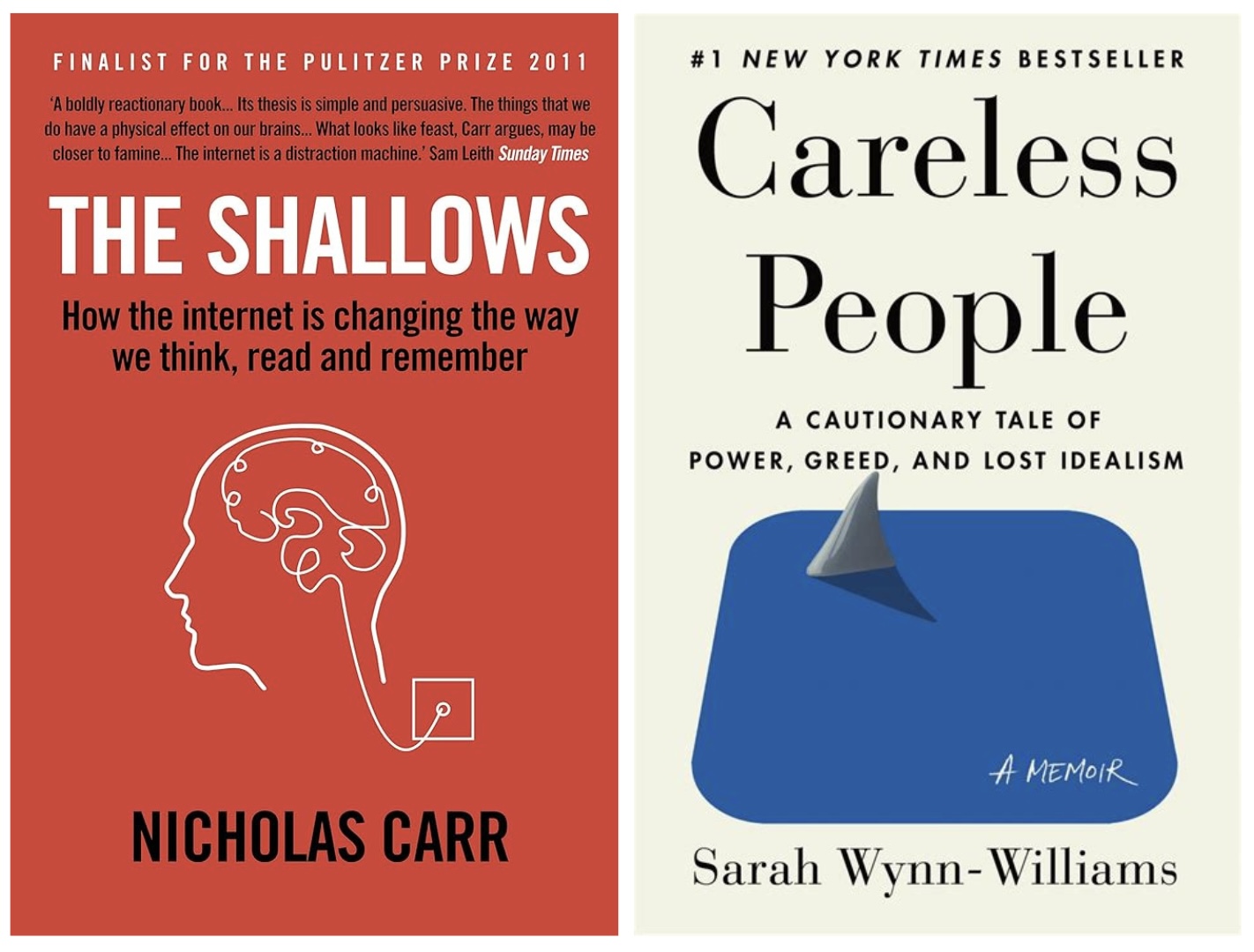
Note that, a cable news show gets fewer nighttime viewers than a really good YouTube video these days. Maybe the fact that we cannot focus is due to the internet and the constant amount of notifications and this swarm of content that we are constantly in. Just like the world shifted from books to television, we have now moved from television to the internet. Postman could not write about the internet because he was writing about in the 80s, but another writer has come along to try to pick up some of these thoughts. In book titled The Shallows (2010), Nicholas Carr argues that the internet is not merely a tool we use but an environment we inhabit, and that prolonged exposure to its structure of hyperlinks, interruptions, and fragmented information is physically rewiring the brain in ways that erode the capacity for deep, sustained reading and thought. It is not surprising that chaos is the word young adults most readily reach for when describing their experience of the internet in one word. In her memoir Careless People (2025), Sarah Wynn-Williams, a former director of global public policy at Facebook, documenting her seven years inside the company and the institutional indifference she witnessed toward the platform's role in real-world harm, from the Rohingya genocide in Myanmar to its influence on the 2016 US election. The book is sharply critical of Facebook's leadership, including Zuckerberg's alleged willingness to use state-of-the-art tech and psychological techniques to optimise revenue$\mathbf{^7}$.
The design logic of a web page is, at its core, retention. Consider a YouTube home screen: rows of videos, notification prompts, a search bar advertising infinite availability, and the moment you click on anything, a fresh set of recommendations appears beside it. The architecture operates on a single premise, that boredom must not be permitted to last even a moment. There is always something adjacent to click on, and the entire interface orients itself around that possibility. We have lived inside this design long enough that it no longer feels unusual. No matter how much appreciation we bestow upon the tech or math making the web work, but it is worth being clear about what it is: a chaotic information environment that presents itself as convenience. YouTube is not even the most aggressive instance of this. TikTok carries the same logic to its limit, reducing the interface to little more than the next video. The experience, even briefly, is disorienting in a way that is hard to separate from the sheer density of stimulation the platform deliberately sustains.
The picture gets worse, as it appears that the game was never about distraction simply. Even when a piece of content is genuinely worth finishing, the interface offers an alternative the moment attention wavers. These platforms are indifferent to whether you complete any particular video or article; what they want is your continued presence. TikTok wants you on TikTok. YouTube wants you on YouTube. The New York Times wants you on its site. The content is incidental to that goal. What this teaches, through sheer repetition, is that information is disposable. If something bores you for even a moment, the platform has already pointed elsewhere. Moving on is not treated as a lapse in attention. The design presents it as the most obvious and natural thing to do. Carr's book, mentioned above, stresses the plasticity of our brains. Basically our ability to change actually how our brains are structured in response to our environments. Our brains actually change based on what we do, what we need to do, and what kind of tools we use.
4. Why do we even need to read? - and the case for stubborn academia
Academia as a formal institution is roughly a thousand years old, dating from the founding of Bologna in 1088, though the lineage runs further back to Plato's Academy in Athens and the scholarly centres of medieval Cairo. The European universities began with theology, law, and medicine, and broadened slowly into the sciences and humanities over subsequent centuries. The German research university of the nineteenth century, Humboldt's Berlin above all, gave scholarship the shape it largely retains today, a professional vocation organised around original inquiry. The industry of academia is now concentrated most heavily in the United States, Britain, and Western Europe, with East Asia closing the distance rapidly, China in particular having poured substantial investment into research infrastructure over the last two decades. Even after surviving centuries of drastically changing trends of human societies, the one quality that academia often gets associated with is stubbornness. Humanity saw the rise and decline of civilisations, landed on moon and has even entered the age of artificial intelligence, but the stubbornness of academia to exchange and propagate information only through reading and writing has not even moved an inch.
Due to the rise of various modes of media, which provides animate form of infotainments like YouTube videos, Instagram reels and many more, it is a popular notion across varying communities these days that reading is just inefficient. This gives rise to the inquisition - why do we even need to read? Furthermore, continuing from the end of the last section, does the stubbornness of academia towards reading has a cure for the pernicious effects of exposure and trends in modern web? Hopefully, the answer to the later question is in affirmation, and the later question tends to be a perfect answer for the former one.
From the lens of cognitive neuroscience, getting information from summaries or even from YouTube videos is a completely different experience than learning from a book. Because in a book, we actually get to follow an author's chain of thought. So as we read an author's thoughts in a book, we are actually thinking with them. We are actually training ourself to think, and as we train ourself to think, we are training ourself to focus. In simple terms, reading is like a mental workout, which we cannot get elsewhere. The previous section kind of paints a dark scenario for almost most of the people we see around, but the good news is that our brain is plastic$\mathbf{^8}$. Dramatically, if we made an effort to read more books, watch less YouTube, throw our phones into like the fires of mountain doom so it could never bother us again, well, that would actually give us a way to save our ability to focus. This really is a solvable problem - just read more!
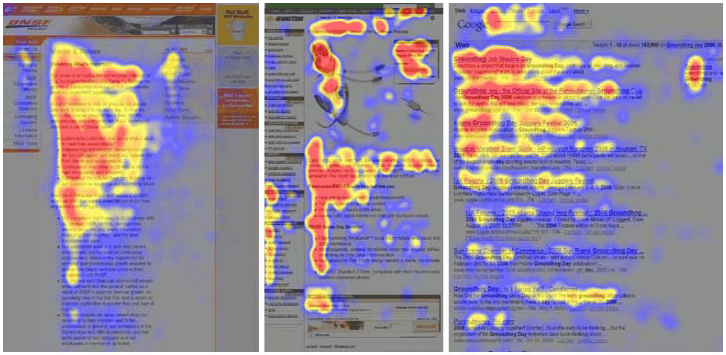
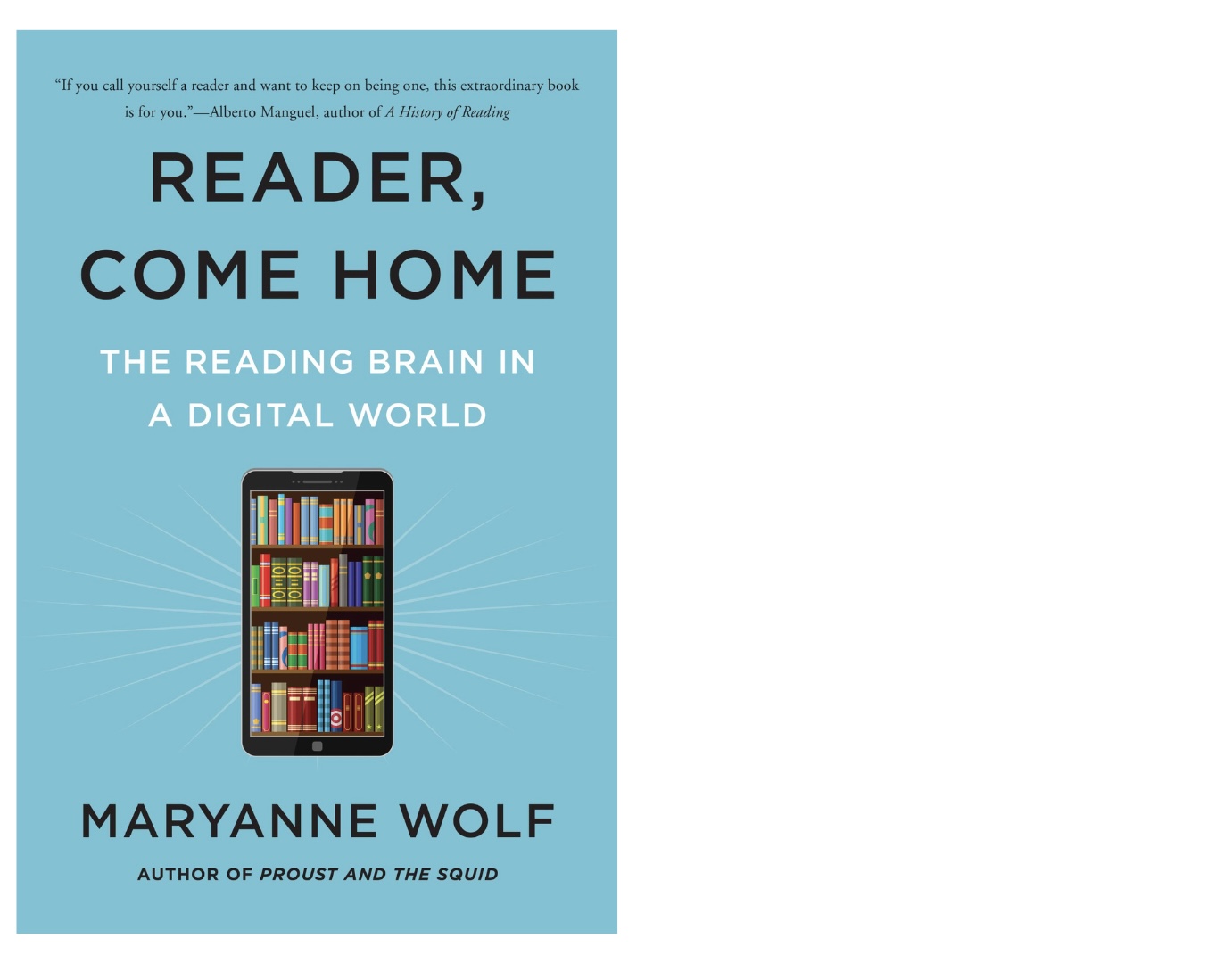
Current research$\mathbf{^9}$ indicates that high-frequency short-form video consumption significantly predicts weaker executive control and impaired alerting systems in the brain. The stubbornness of the university - insisting on the book and the thesis - is not an inability to evolve. It is a renascence of the only medium that protects the human capacity for deep, independent thought. Cognitive neuroscientist Maryanne Wolf warns that the 'F-pattern' skimming prevalent in digital environments effectively short-circuits the deep reading circuit, causing the neural pathways responsible for empathy and critical analysis to atrophy from disuse. To counteract this cognitive erosion, she advocates for the cultivation of a bi-literate brain - one capable of switching between the rapid processing required for digital media and the slow, contemplative focus essential for profound comprehension.
5. Conclusion
Albeit the solution looks quite simple at face-value, the depth of the problem often gets underestimated. We have to remember that there is a war going on for our attention, a war which is not even close to being fair. Most of the social media platforms named earlier in this article, and other large corporations alike have PhDs in psychology and the best design engineers that they can find, all working to keep you engaged. This fact alone must establish that the internet is a hostile design environment. It is a environment that has been designed in order to steal our attention and thus rob us of our ability to focus as much as possible because people make money from it.
The thought process that went into building these applications, Facebook being the first of them, was all about how do we consume as much of your time and conscious attention as possible? And that means we need to sort of give a little dopamine hit every once in a while because someone liked or commented on a photo or a post or whatever.
- Sean Parker, the first president of Facebook
The above quote from one of the foundational builders of Facebook is not a confession, rather it is bragging at face value. We might consider that to be just one very telling admission from someone who would know. Surprisingly, the story is not very different for other platforms. It's all about capturing and really holding on to your attention. By comparison, something like this, a book is not that good at holding our attention unless we are really used to giving our attention to it. We have to give your attention to books, but phones, screens, the internet, videos, they steal your attention.
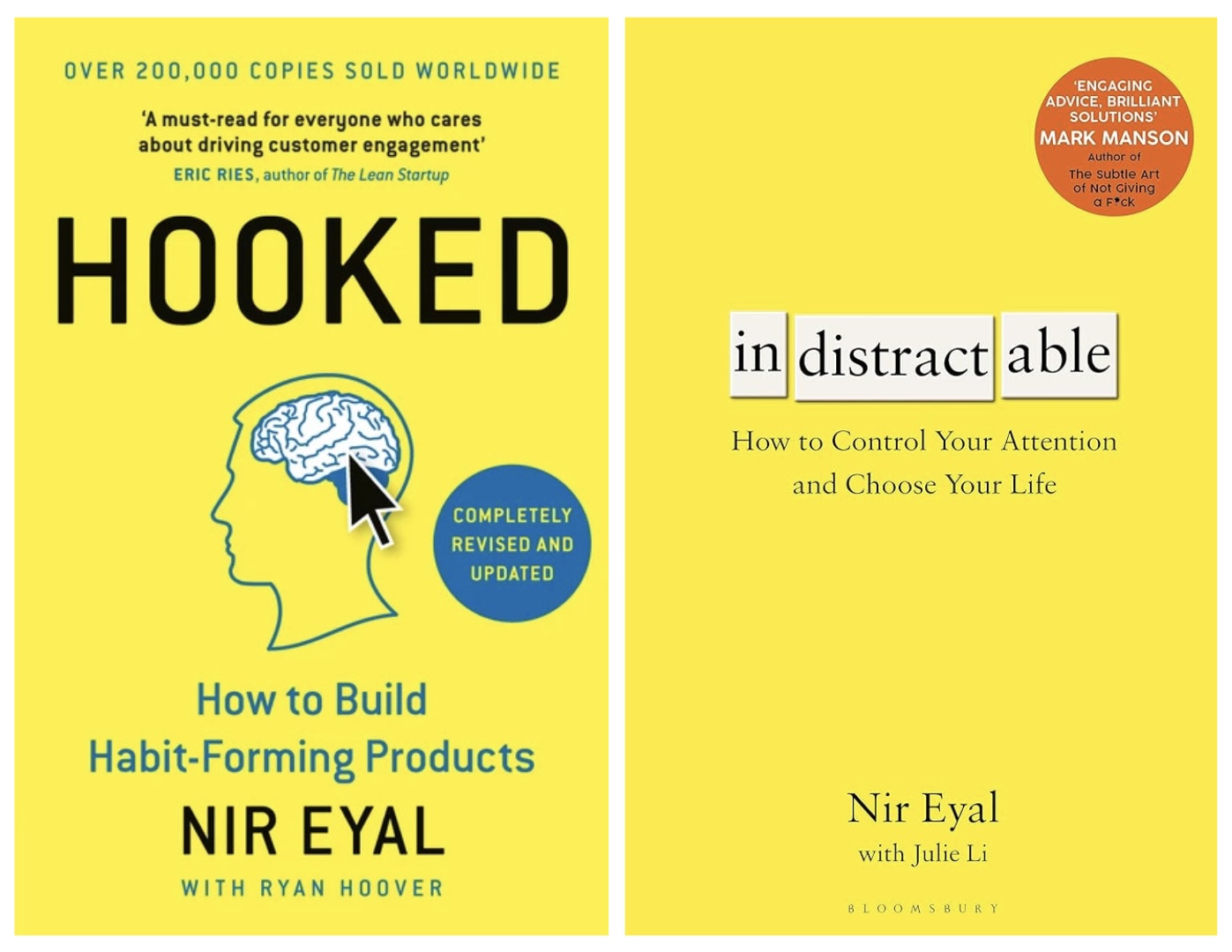
The book titled Hooked (2014) by Nir Eyal is a product design manual built around what he calls the Hook Model, a four-stage cycle of trigger, action, variable reward, and investment, through which technology companies embed their products so deeply into daily routine that users return without any external prompting. On a greener-side, his book Indistractable is illuminating in a comfortable way, where Eyal presents detailed antidotes to the Hook Model. The naively simplified methodologies to get back the ownership of your focus is to turn off your phones. You have to learn to take long breaks from it. If you can take day-long breaks from it, if you can go an entire day without looking at your phone, then you're already well on your way. The harder part is to get used to it. Having something in your pocket that can always grab your attention with a single sound or a buzz, or even if you have it on silent, the ability, the sort of promise that if you just turned it on, maybe you would find something fun, that is going to rob you of your ability to focus. The point is to just get used to not needing to be stimulated by a phone or by a screen all the time. And by doing that, we are going to be training our brains to actually rewire themselves. We are actually then encouraging our minds to get used to focusing again. And maybe we can make a little bit of progress and we will actually be able to focus on things that we care about.